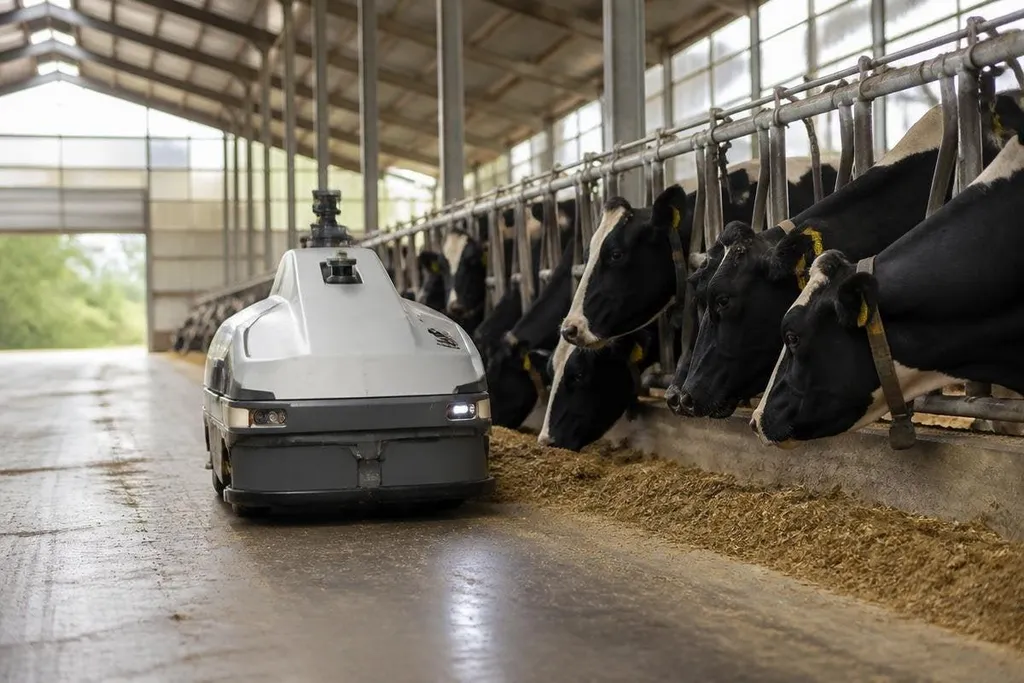
A livestock robot may spend its day moving feed, checking animals, or cleaning floors. AI changes the job by helping the robot decide what it sees, where it should go, and when a person needs to step in.
Quick read
- Cameras and thermal sensors help robots spot changes in animals and their surroundings.
- AI can turn repeated farm tasks into scheduled robot work, but safe operation still needs clear limits.
- The hardest part is proving that the system works across mud, dust, changing light, and moving animals.
From fixed tasks to decisions
Older farm automation usually follows a set path or repeats a timed action. An AI system can use sensor data to adjust that action when the barn changes around it.
A camera may help a mobile robot find an open route around a group of cattle. A thermal sensor can add information about body heat, while a microphone may pick up sounds that need a closer check.
Each sensor sees a different part of the scene, so the robot can compare them before it acts. That does not make the robot independent in every situation. It gives the control system more information than a timer or fixed route can offer. The farm still needs rules for speed, distance from animals, blocked paths, and safe stops.
Where the work changes
Feed delivery is a clear example. A robot can follow planned routes, check its position, and adjust its path when equipment or animals block the normal route. The useful result is less manual driving during repeated work, not a robot that can handle every farm task.
Animal monitoring works in a different way. A system may compare new images with earlier images and flag a change in movement, posture, or location. A worker can then inspect the animal and decide what to do. The software points to a possible issue; it does not replace veterinary judgment.
Cleaning robots face their own limits. Wet floors, bedding, gates, and waste can change the robot’s grip and movement from one pass to the next. AI may help the robot identify an obstacle or choose a new route, but the hardware still needs enough traction, battery power, and room to turn.
Those limits make farm conditions part of the AI claim. Livestock robotics reporting from Robot24.com can tie that claim to the robot’s task, farm setting, weather, and work left after each run. The next question is whether the system can learn from enough farm data to handle those changes.
The hard part is farm data
AI systems need examples from the places where they will run. A model trained on clean images from one barn may work poorly when the light changes, animals stand close together, or dust covers a camera.
Farm operators also need to know what the system saw and why it raised an alert. A clear record can show the image, sensor reading, time, and robot location linked to that event. That makes it easier to check a false alarm and find a missed problem.
Data handling matters too. Images of workers, farm layouts, and animal records may need access rules. When connected to a farm network, the robot should have a known update process, a manual stop, and a way to keep working safely when its connection drops.
The strongest opposing view is that farms should wait until AI systems work without supervision. That standard would delay useful tools, but the first deployments still need people to check alerts and review failures.
What AI cannot prove yet
A product demo can show a robot moving through a barn. It does not prove that the robot can work through a full season, avoid animals in tight spaces, or keep its sensors clean without regular service.
Cost also reaches beyond the robot’s sale price. A farm may need charging equipment, network coverage, staff training, software fees, spare parts, and time for maintenance. Those details decide whether automation fits the daily work.
I'd choose a system with a narrow task and clear records before buying one that promises to manage the whole barn. Reliable handling of one repeated job gives a farm a result it can measure.
A buying checklist
Before a trial, check these points:
- Name the task: Set one job with a clear start point, end point, and success measure.
- Check the setting: Test mud, dust, wet floors, gates, slopes, and changing light.
- Set human control: Confirm the stop button, remote control, alert process, and safe restart.
- Review the data: Ask what the robot stores, who can view it, and how long records remain available.
- Count the work: Include charging, cleaning sensors, software costs, repairs, and staff time.
- Plan the trial: Run the robot long enough to record missed alerts, false alerts, blocked routes, and service visits.
The next useful step for livestock robotics is not a wider promise. It is published farm results that show task time, alert accuracy, service needs, and safety events across real barns.